Instant Lawn vs Artificial Grass: Which Is Better for Melbourne?
Instant lawn is better for most Melbourne backyards where people play, relax and garden. Artificial grass is better for shaded, high-wear or hard-to-maintain areas, or where you want a green surface with almost no upkeep. Neither wins everywhere. The right choice depends on sun, soil, budget and how the space is used.
TXR Landscaping Contractors installs both, so we have no reason to push one over the other. This guide compares them on the factors that matter in Melbourne's climate, including where each falls short.
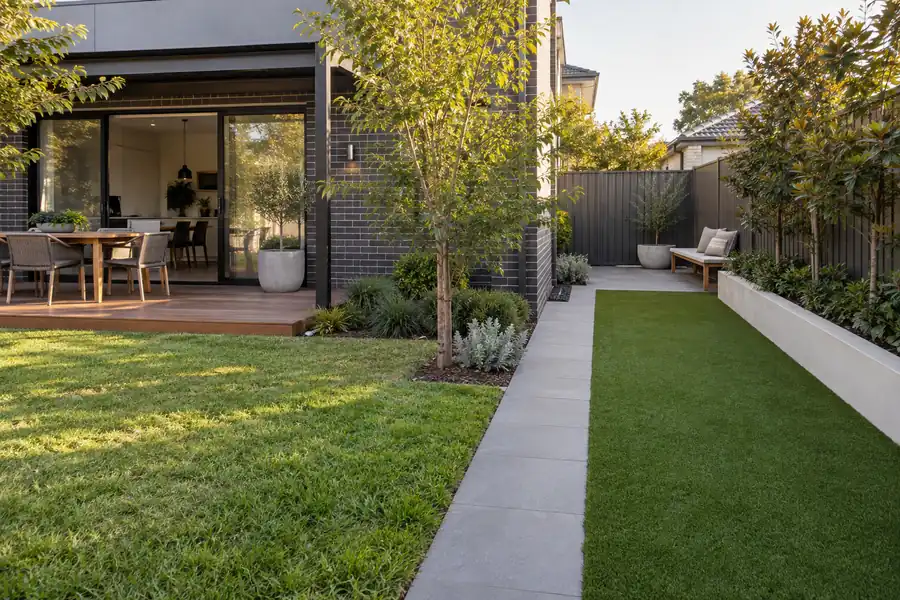
Instant Lawn vs Artificial Grass at a Glance
| Factor | Instant lawn (natural turf) | Artificial grass |
|---|---|---|
| Upfront cost | Lower | Higher |
| Ongoing cost | Mowing, water, fertiliser | Occasional cleaning |
| Maintenance | Regular | Minimal, but not zero |
| Summer heat | Stays cooler | Can get much hotter in full sun |
| Water use | Needs watering | None for the lawn itself |
| Shade | Struggles in deep shade | Not affected by light, but can grow algae |
| Winter colour | Some varieties fade | Stays green |
| Lifespan | Long-lived if cared for | Typically 10 to 15 years |
| Pets and kids | Soft, but wears and muds | Durable, but heats up and needs cleaning |
What Is Instant Lawn?
Instant lawn is natural turf grown on a farm and delivered as rolls, so you get a finished lawn in a day instead of waiting weeks for seed. Common Melbourne varieties include buffalo grasses such as Sir Walter, kikuyu, couch, and cool-season tall fescue blends. Each handles sun, shade, wear and cold differently, so choosing the variety matters as much as choosing natural over artificial.
What Is Artificial Grass?
Artificial grass, also called synthetic turf, is a manufactured surface of polyethylene or polypropylene fibres on a perforated backing, laid over a compacted base. Quality varies widely by pile height, fibre density, backing and UV protection, and so does price.
Cost: Upfront and Over Time
Instant lawn costs less to install. Artificial grass costs more upfront, and the price rises with pile quality and the amount of base preparation needed. Both need proper ground preparation, which is a large part of any quote.
Over time the gap narrows. A natural lawn keeps costing money through mowing, water, fertiliser and occasional repairs. Artificial grass costs little to run but has a finite life and has to be replaced eventually. For current numbers, see our turf installation costs guide, and request a site quote for a real figure.
Maintenance and Time
Instant lawn needs regular mowing, watering, feeding and edging, plus occasional weed control and repair of worn patches, especially on high-traffic areas.
Artificial grass needs brushing, rinsing and removal of leaves and debris. It doesn't need mowing, watering or feeding, but it isn't maintenance-free.
If time is the deciding factor, artificial grass wins clearly.
Melbourne's Climate: Heat, Rain and Water
Melbourne swings between hot dry summers, cold wet winters and heavy storms. That affects each option differently.
Heat. Natural grass stays comparatively cool because it releases moisture. Artificial grass can get significantly hotter in full summer sun, sometimes too hot for bare feet or paws. Cooler-running products, shade and wetting the surface help, but it remains a real consideration for families and pet owners.
Water. Artificial grass needs no irrigation, which appeals to anyone who remembers Melbourne's drought-era water restrictions. Natural lawns need regular summer watering, though many varieties are drought-tolerant once established.
Rain and drainage. Heavy rain can turn a poorly drained natural lawn boggy, especially on clay soil. Artificial grass drains through its backing, but only as well as the base beneath it. In both cases, preparation matters more than the surface.
Sun, Shade and Soil
Most natural lawns struggle in deep shade, where they thin and moss over. Shaded courtyards and the south side of houses are where artificial grass makes the most sense. In full sun with decent soil, natural lawn generally performs better and looks better.
Pets and Kids
Natural lawn is soft, cool and safe to fall on, but it wears, muds in wet weather and can develop brown patches from pet urine.
Artificial grass handles heavy wear and stays clean in wet weather, but needs regular rinsing where pets use it, because urine and waste can leave lingering smells. It can also heat up in summer. Neither is perfect. Which one suits you depends on which downside you would rather manage.
Look and Feel
Good instant lawn looks and feels like real grass because it is real grass. Modern artificial grass has improved a lot, but cheaper products tend to look uniform and glossy, especially in low winter light. Higher-quality products with varied fibre colour and pile height look far more natural.
Lifespan and Environmental Impact
A well-maintained natural lawn can last indefinitely, though it may need re-laying after neglect or damage. Artificial grass typically lasts around 10 to 15 years depending on quality and use, and many products carry a warranty.
On the environmental side, natural lawn absorbs carbon, cools its surroundings and supports soil life, but uses water, fuel and sometimes fertiliser. Artificial grass saves water and mowing, but is a plastic product, and recycling options at end of life are still limited.
What Most Comparisons Leave Out
Most pages on this topic are written by sellers of one product, so the awkward details tend to be missing. These are the ones that catch Melbourne homeowners out.
Artificial grass: the fine print
Reflected heat can melt it. Low-E and energy-efficient windows, glass doors and reflective pool fencing can focus sunlight onto one spot on the lawn. The result is melted, warped or scorched fibres, and it can also come from a neighbour's glass. This is a known industry problem, and manufacturer warranties commonly exclude it. If your lawn sits in front of large west- or north-facing glazing, check this before you buy.
The warranty may not cover what actually goes wrong. A 10-year warranty sounds like 10 years of cover, but exclusions commonly include reflective heat damage, matting or flattening, burns from hot objects, and damage from wear or pets. Ask for the warranty in writing and read the exclusions.
The finish depends on the base and edges. A poor base shows up as ripples, lifted edges and visible seams. Weeds and moss can also establish in debris that collects in the pile and along borders. A cheap install of a good product often looks worse than a good install of a mid-range one.
Traffic paths flatten. High-use routes, such as the line from the back door to the clothesline, can mat down over time. Brushing helps, but it doesn't always restore the pile.
Shaded, damp spots can grow algae. South-facing courtyards and areas under trees, the exact places artificial grass is often chosen for, can go green-black with algae or moss unless cleaned regularly.
Repairs and replacement are harder than they look. Patching a damaged section can leave a visible colour difference, because batches vary and the original ages. Removing a tired lawn also costs money, and the base usually needs redoing before anything else goes down.
Instant lawn: what the sales pitch skips
"Green all year" isn't guaranteed. Warm-season varieties such as buffalo, kikuyu and couch slow down and lose colour through Melbourne's cold months. Cool-season tall fescue stays greener in winter but needs more water and care in summer. Pick the variety for how you want the lawn to look in July, not just January.
Soil preparation decides the result. Turf laid over compacted clay, poor levels or old weeds can develop dead patches, gaps at the joins as rolls shrink in heat, and lifting edges. The first few weeks of watering also matter. Most instant lawn failures start with preparation and early care, not with the turf.
Some varieties spread where you don't want them. Kikuyu, in particular, will creep into garden beds and along paving unless edged properly.
Pests, disease and compaction are ongoing risks. Lawn grubs, fungal disease and thatch build-up can damage established lawns, and clay soils compact under foot traffic. Regular aeration and feeding keep a lawn healthy in the long run.
It isn't usable straight away. Even though it looks finished on day one, new turf needs a few weeks of watering and limited foot traffic while the roots bed in.
Getting either wrong is expensive. A failed lawn means re-laying. A failed artificial installation means removal and base rework. Where the site is difficult (shade, clay, glass, slopes), a site inspection before choosing is worth more than any comparison table.
Council Rules and Permeability
Many Melbourne councils limit how much of a property can be hard or impermeable surface. Natural lawn counts as permeable. Artificial grass isn't treated the same way everywhere, and some councils don't count it as permeable area. Laying it over tree root zones can also affect trees. Check your council's requirements before committing, especially if you are renovating or planning a build.
Which Should You Choose?
Choose instant lawn if:
Your backyard gets decent sun You want a cool, soft surface for kids, pets and entertaining You want the lower upfront cost You are happy to do (or pay for) regular upkeep You accept that most varieties lose some colour in winter
Choose artificial grass if:
The area is heavily shaded or hard to maintain You want minimal upkeep and no watering The area is small, high-wear or sits over difficult ground There is no large glazing or reflective surface focusing sun onto the lawn area You accept the higher upfront cost and summer heat Consider a mix. Many Melbourne gardens work best with natural lawn in the sunny main area and artificial grass in shaded or high-wear spots such as side passages and courtyards. Because we install both, we can plan and quote the two together as one job.
Why Choose TXR for Lawn Installation in Melbourne?
- We install both instant lawn and artificial grass, so our advice follows your site, not a product we need to sell
- Site preparation, levelling and drainage are built into every quote, because base work decides how either surface performs
- We assess sun, shade, soil and nearby glass before recommending a surface
- Turf can be combined with paving, garden beds and full landscape projects across Melbourne
- Quotes are based on your site and intended use, not a generic rate
FAQs
Is instant lawn cheaper than artificial grass in Melbourne?
Upfront, yes. Instant lawn is usually cheaper to install, though it costs more to maintain over the years.
Does artificial grass get hot in Melbourne summers?
It can. In full sun it may be much hotter than natural grass, which matters for bare feet and pets.
Can artificial grass melt from window reflections?
Yes. Reflected sunlight from Low-E windows and other glass can melt or scorch synthetic fibres, and warranties often exclude it.
How long does instant lawn take to establish?
It looks finished on the day it is laid, but roots need a few weeks to bed in, and it should be watered and kept off heavy traffic during that time.
Does instant lawn stay green in a Melbourne winter?
Warm-season varieties usually lose some colour and slow down in winter. Cool-season varieties hold colour better but need more summer care.
How long does artificial grass last?
Typically 10 to 15 years, depending on product quality, sun exposure and use.
Why does artificial grass sometimes look ripply or lift at the edges?
Usually because of poor base preparation or edge fixing, not the grass itself.
Which is better for dogs?
Both have trade-offs. Natural lawn stays cooler but can brown and wear, while artificial grass is durable but needs regular cleaning and can get hot.
Which is better for shady backyards?
Artificial grass, in most cases. Natural lawn struggles in deep shade, although some varieties tolerate it better than others.
Do I need council approval for artificial grass?
Usually not for a simple residential lawn, but permeability rules and tree protection can apply. Check with your council.
Not sure which suits your yard? TXR Landscaping Contractors installs both instant lawn and artificial grass across Melbourne. Request a site-based quote and we'll recommend what fits your soil, sun and budget.
For high-wear play areas, see our school landscaping service.